From automatic doors to text messaging, discover how accessibility has driven some of the world's most impactful innovations.

“When we design for disability first, you often stumble upon solutions that are better than those when we design for the norm.” — Elise roy
Design thinking is a process for solving problems by prioritizing the consumer’s needs above all else. It relies on observing, with empathy, how people interact with their environments, and makes use of an iterative, hands-on approach to create innovative solutions.
Design thinking is “human-centered,” which means that it uses evidence of how consumers (humans) actually engage with a product or service, rather than how someone else or an organization thinks they will engage with it. To be truly human-centered, designers watch how people use a product or service and continue to refine the product or service in order to improve the consumer’s experience. This is the “iterative” part of design thinking. It favors moving quickly to get prototypes out to test, rather than endless research or reflection.
Warren Berger says that design thinking teaches us to look sideways, to reframe, to refine, to experiment and, probably most importantly, ask those stupid questions. Design thinkers believe that everyone is creative. They believe in bringing people from multiple disciplines together, because they want to share multiple perspectives and bring them together and ultimately merge them to form something new.
Imagine this; how do we help disabled people get in and out of buildings safely?
Automatic doors. Once just a clever Sci Fi trick on Star Trek, now it is present everywhere.

Accessibility with elevators is not just used by people in wheelchairs — parents/carers with children in prams/pushchairs and toddlers, older people perhaps with health issues or mobility aids, shoppers using supermarket trolleys to take their shopping to their cars, or when someone just doesn’t feel like walking, even young people needing to check their mobile phones etc. all happy users.
A set of 7 principles aimed at creating inclusive environments inherently accessible to all. The full incorporation of the 7 principles, would mean that all people would be able to access both the built and social environment.
Equitable Use — The design is useful and marketable to people with diverse abilities.
Flexibility in Use — The design accommodates a wide range of individual preferences and abilities.
Simple and Intuitive Use — Use of the design is easy to understand, regardless of the user’s experience, knowledge, language skills, or current concentration level.
Perceptible Information — The design communicates necessary information effectively to the user, regardless of ambient conditions or the user’s sensory abilities.
Tolerance for Error — The design communicates necessary information effectively to the user, regardless of ambient conditions or the user’s sensory abilities.
Low Physical Effort — The design minimizes hazards and the adverse consequences of accidental or unintended actions.
Size and Space for Approach and Use — Appropriate size and space is provided for approach, reach, manipulation, and use regardless of user’s body size, posture, or mobility.
Inclusive designing has revolutionized communication.
Vinton Cerf, the computer scientist at Google, was hard of hearing. In the 1970s, he was part of an initial research team trying to find ways to share documents with colleagues without talking on the phone. Their 1981 network led to our sophisticated internet.
SMS texting was invented by Finnish inventor Matti Makkonen with two other Finns, Seppo Tiainen and Juhani Tapiol. They figured out a way for deaf people to communicate with one another without speaking. But global communication was transformed when it was revealed that text messaging presented a more effective solution for saving Telecom bandwidth.
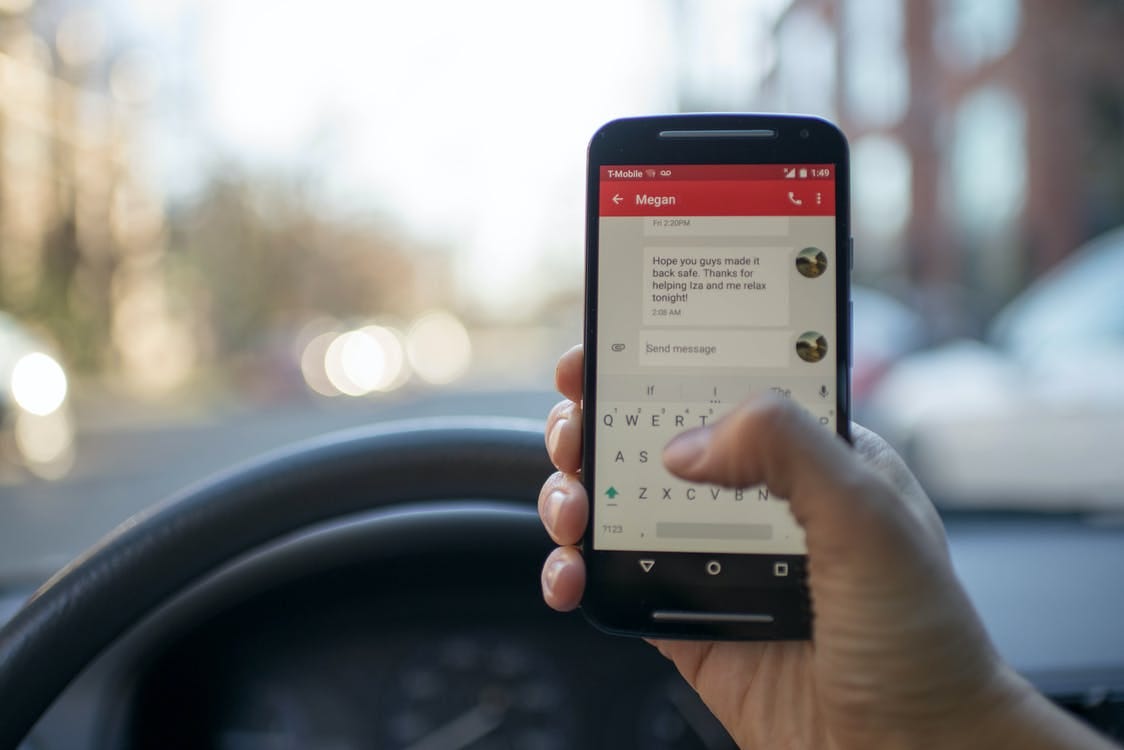
Now text messages are universal. Stuck in traffic? Running late for a meeting? Need to make dinner reservations? Just text. It’s in writing. It can be accessed when you have time. It is able to be read and understood easily. Furthermore, it can even be ignored. “Oh, I didn’t get your text!” Even popular instant messaging services like WhatsApp and Telegram were inspired by text messaging.
Captions are necessary for individuals with hearing impairments in order to access information presented by audio. They also benefit someone who wants to watch a video in a library or a quiet office environment without disturbing others. English language learners may also have an increased comprehension of the information where captions are provided.

Conclusion
Tim Berners-Lee, an English engineer and computer scientist best known as the inventor of the World Wide Web wrote in 2006 “The power of WWW is in its universality. Access by everyone regardless of disability is an essential aspect.” He also said “I think, in general, it’s clear that most bad things come from misunderstanding, and communication is generally the way to resolve misunderstandings — and the Web’s a form of communications — so it generally should be good”. The way to make that communication good is by including everyone, regardless of their ability or disability. As I grow older, and my eyes don’t focus as well as before, just give me a bigger font — my disability will then disappear.
A small change in accessibility reaps enormous benefits for me. Just think what a larger change in accessibility would do for others.


